When you search for flower preservation, two names come up almost everywhere: resin and botanical pressing. They are completely different methods, in materials, result, durability, and environmental impact.
This article is not advertising. It is an honest comparison so you can decide with full information.
What is resin preservation
Epoxy resin is a synthetic polymer, a liquid plastic that, when it solidifies, encapsulates flowers inside it. The result is a three-dimensional object, transparent or coloured, that can take various forms: spheres, blocks, jewellery, decorative pieces.
It is visually very appealing in photographs. Online, the results look impressive.
What is rarely mentioned:
- Resin is a petrochemical plastic. It is not biodegradable. It is not recyclable. The curing process releases volatile organic compounds (VOCs) that can be harmful without adequate ventilation.
- The flowers inside resin continue to degrade. Resin encapsulates but does not stop decomposition, it only slows it down. Over time, flowers can darken, lose colour, or develop visible internal moisture.
- The real durability of a resin piece with natural flowers is uncertain. There is limited data on what happens at 20 or 30 years.
- Resin yellows with UV exposure: the material itself ages visibly.
What is botanical pressing
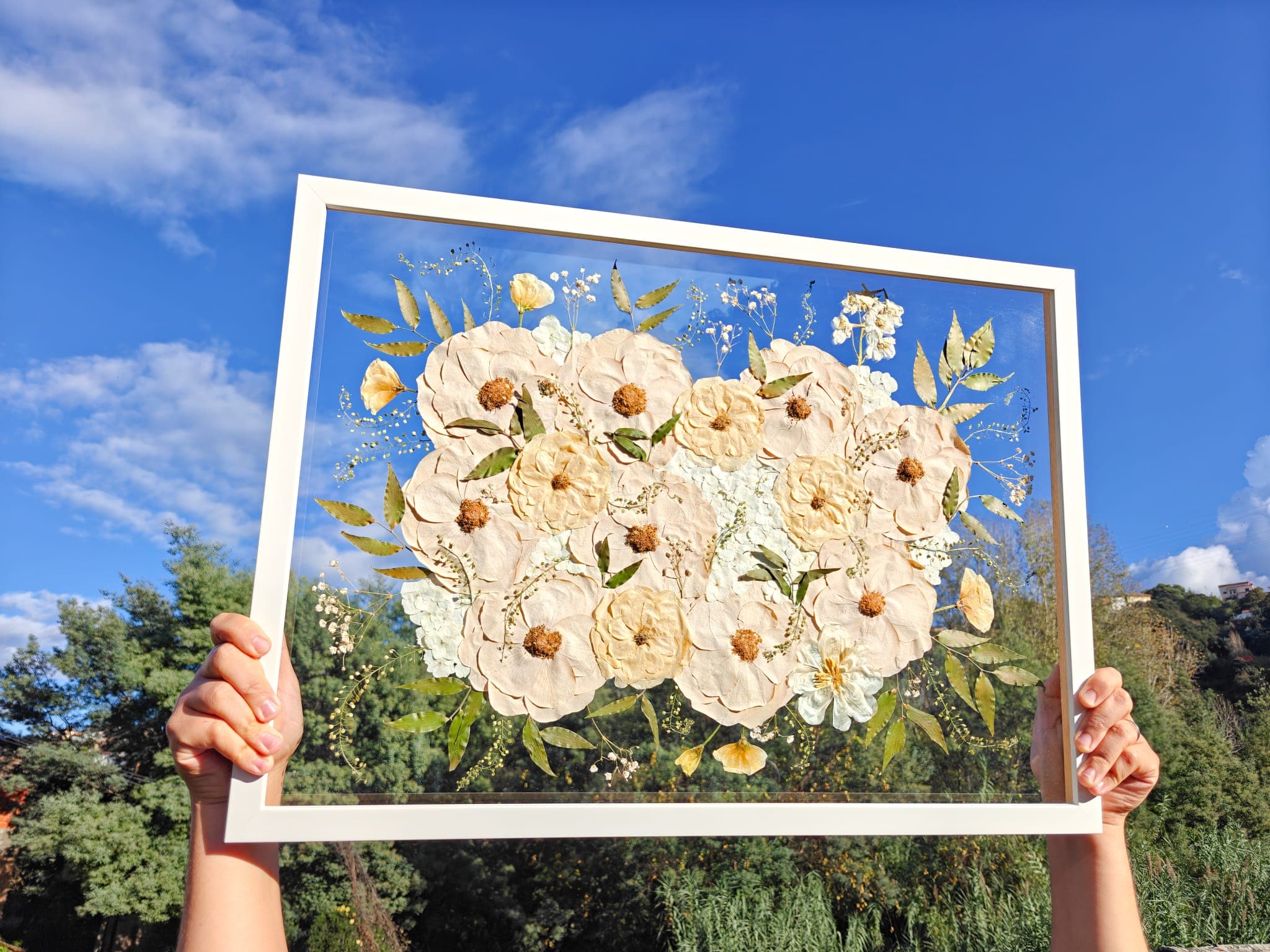
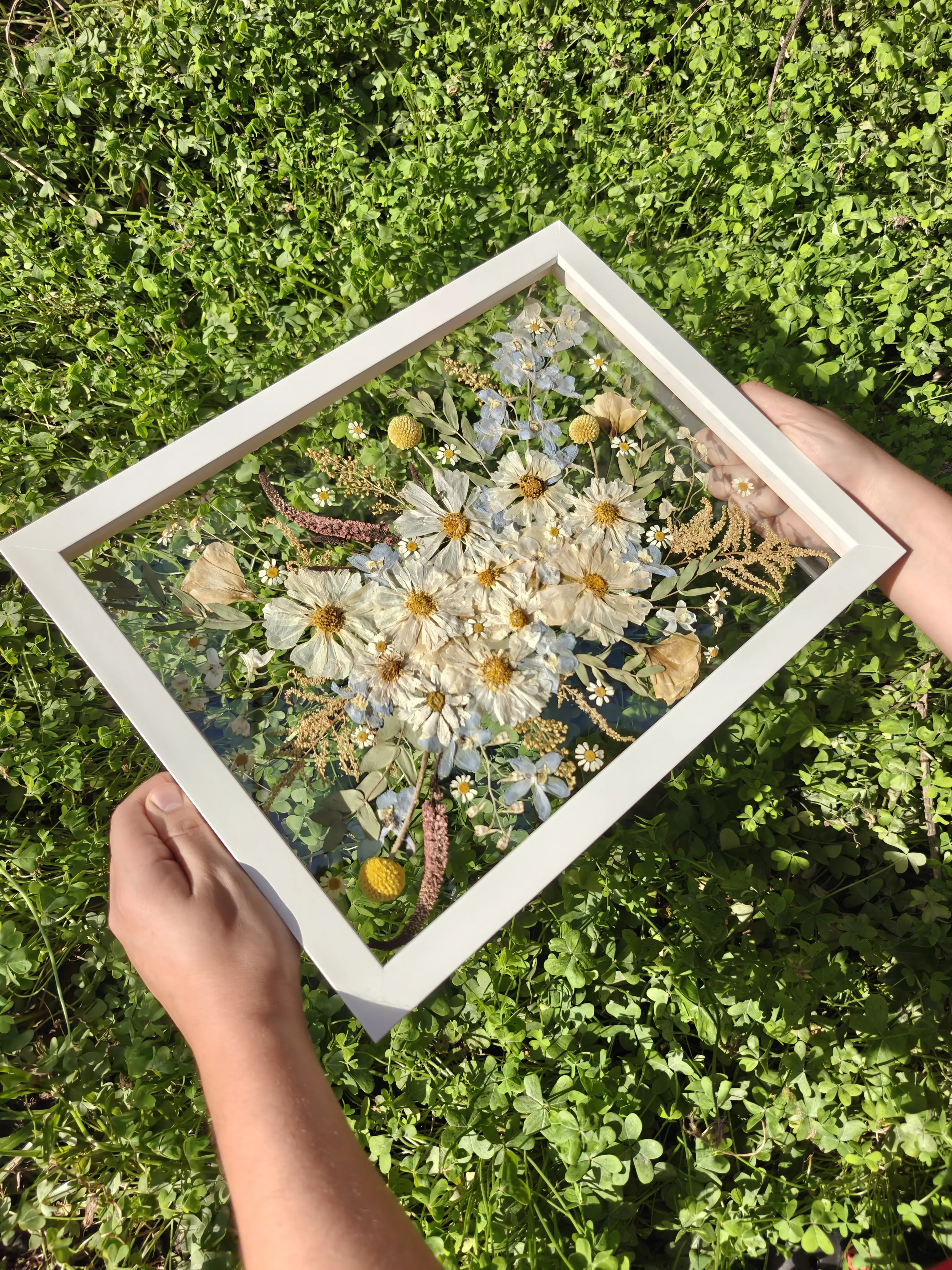
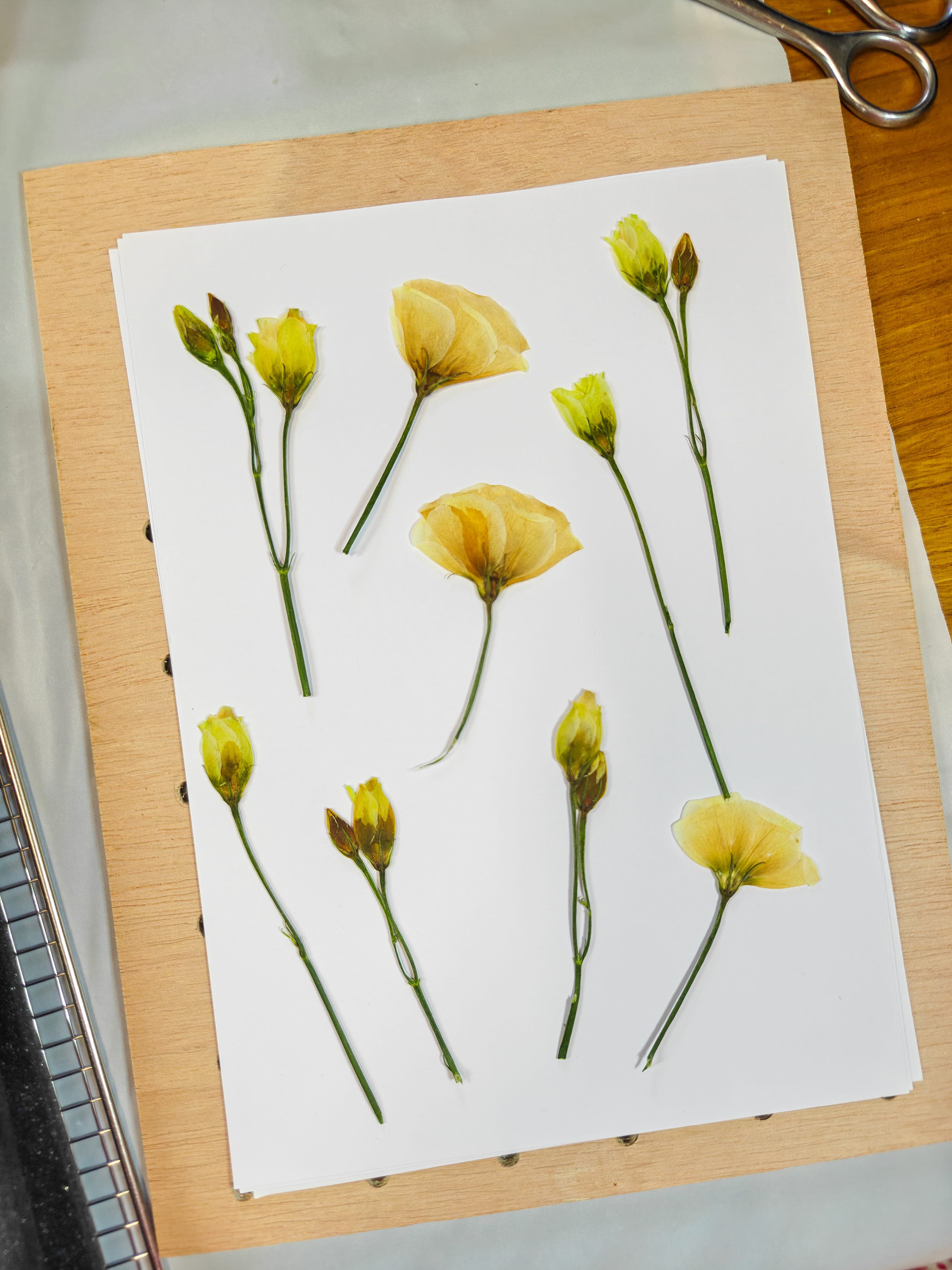
Botanical pressing is an artisan process with centuries of history. Flowers are pressed individually, with pressure and time, until all moisture is removed. The result is a flat, light petal that retains the shape and structure of the flower.
Pressed flowers are then arranged into a work of art, a manually designed composition, and framed with museum-grade conservation materials.
What sets this method apart:
- 100% natural. No chemicals, no plastic, no solvents.
- Proven durability. There are botanical specimens pressed in museums that are over 300 years old. The method is the same used in scientific herbaria since the 16th century.
- Museum anti-UV glass. When framed with UltraVue® UV70 glass, as we do at Flores à Beira-Rio, the flowers are protected from light degradation for decades.
- A unique work of art. Each composition is designed by hand for that specific bouquet. No two frames are the same.
Direct comparison
| Resin | Botanical pressing | |
|---|---|---|
| Material | Petrochemical plastic | Natural, no chemicals |
| Dimension | 3D | 2D (flat) |
| Durability | Uncertain (resin yellows, flowers degrade) | Proven (centuries) |
| Recyclable | No | Yes (frame and glass) |
| Maintenance | Avoid scratching the surface | Simple cleaning with microfibre |
| Visual result | Encapsulated decorative object | Framed work of art |
| Environmental impact | High | Minimal |
Which should you choose?
If you value long-term durability, natural materials, and a museum-quality result, botanical pressing is clearly superior.
If you prefer a three-dimensional object, such as a sphere, a block, or a piece to hold in your hand, and you accept the durability and environmental limitations, resin may be the option.
What we do not recommend is choosing resin because it is cheaper or faster, without understanding what you are giving up. A wedding bouquet deserves a conscious decision.
Why we do not do resin
At Flores à Beira-Rio, the choice for botanical pressing was not accidental. It was a conscious decision from the very beginning.
We do not want to create objects that yellow in five years. We do not want to use plastic that cannot be recycled. And we do not want the flowers we preserve to continue degrading inside a transparent block.
We make frames to last decades, with materials that carry that guarantee.
Want to know more about our process? See how it works.