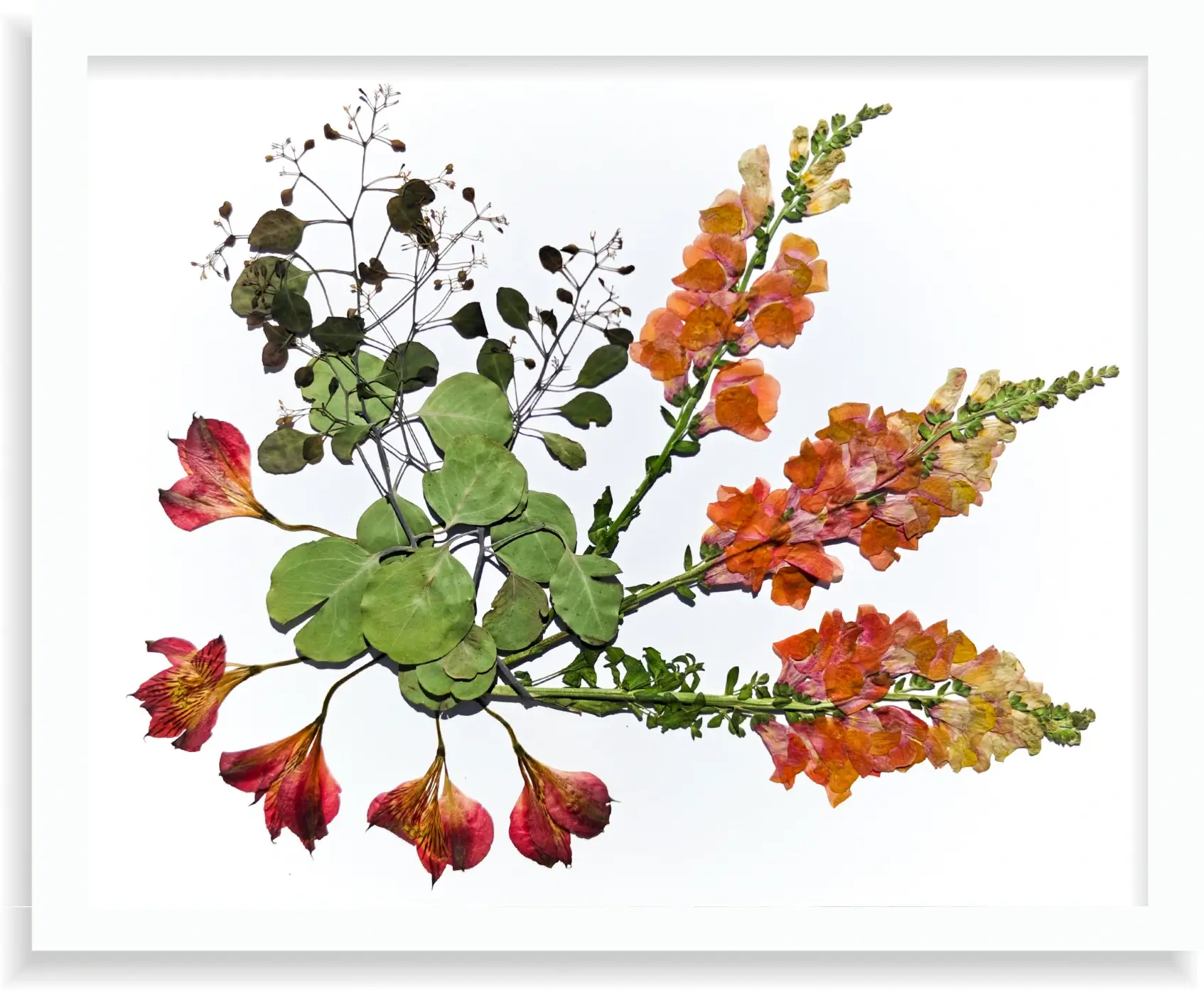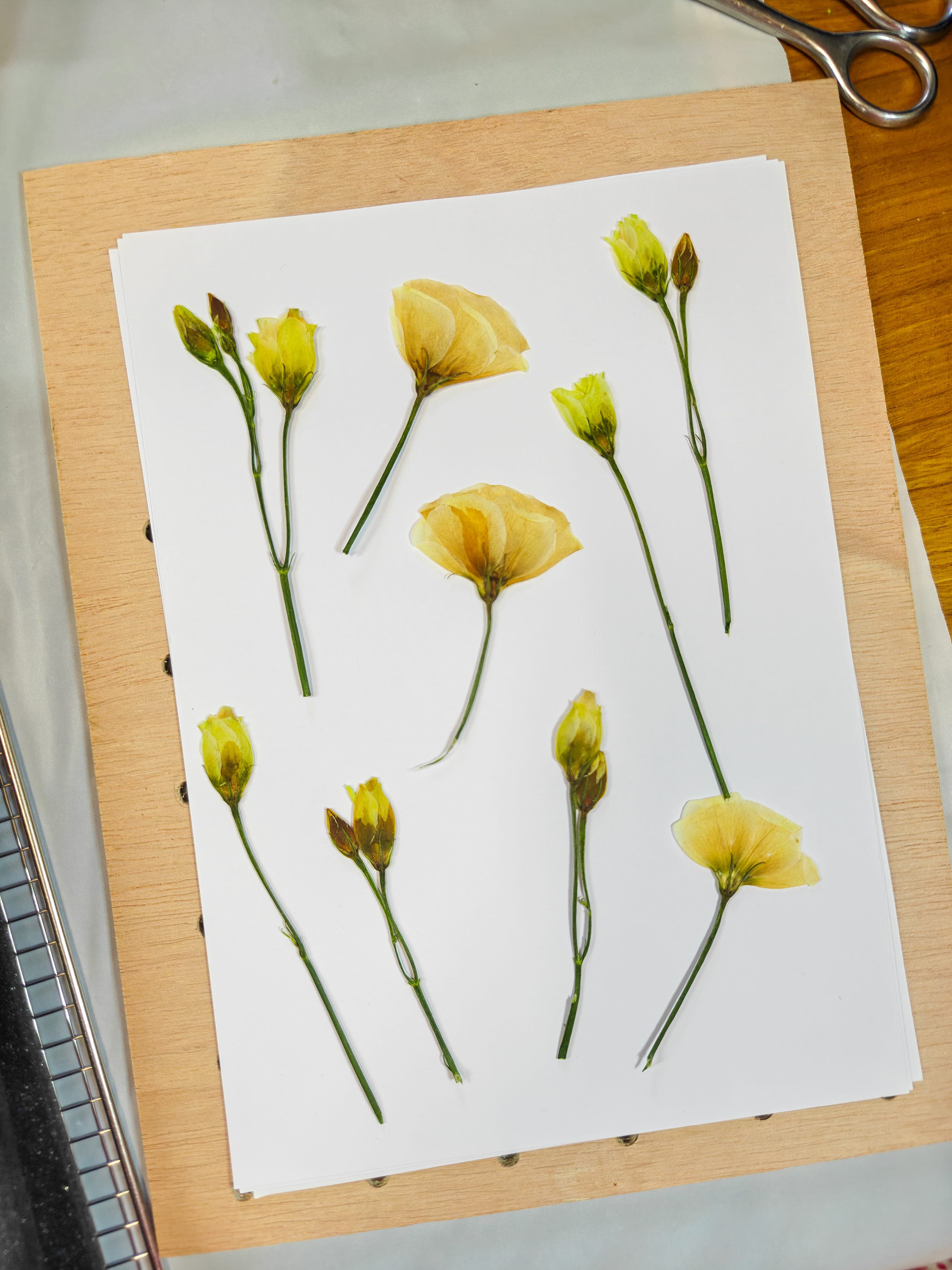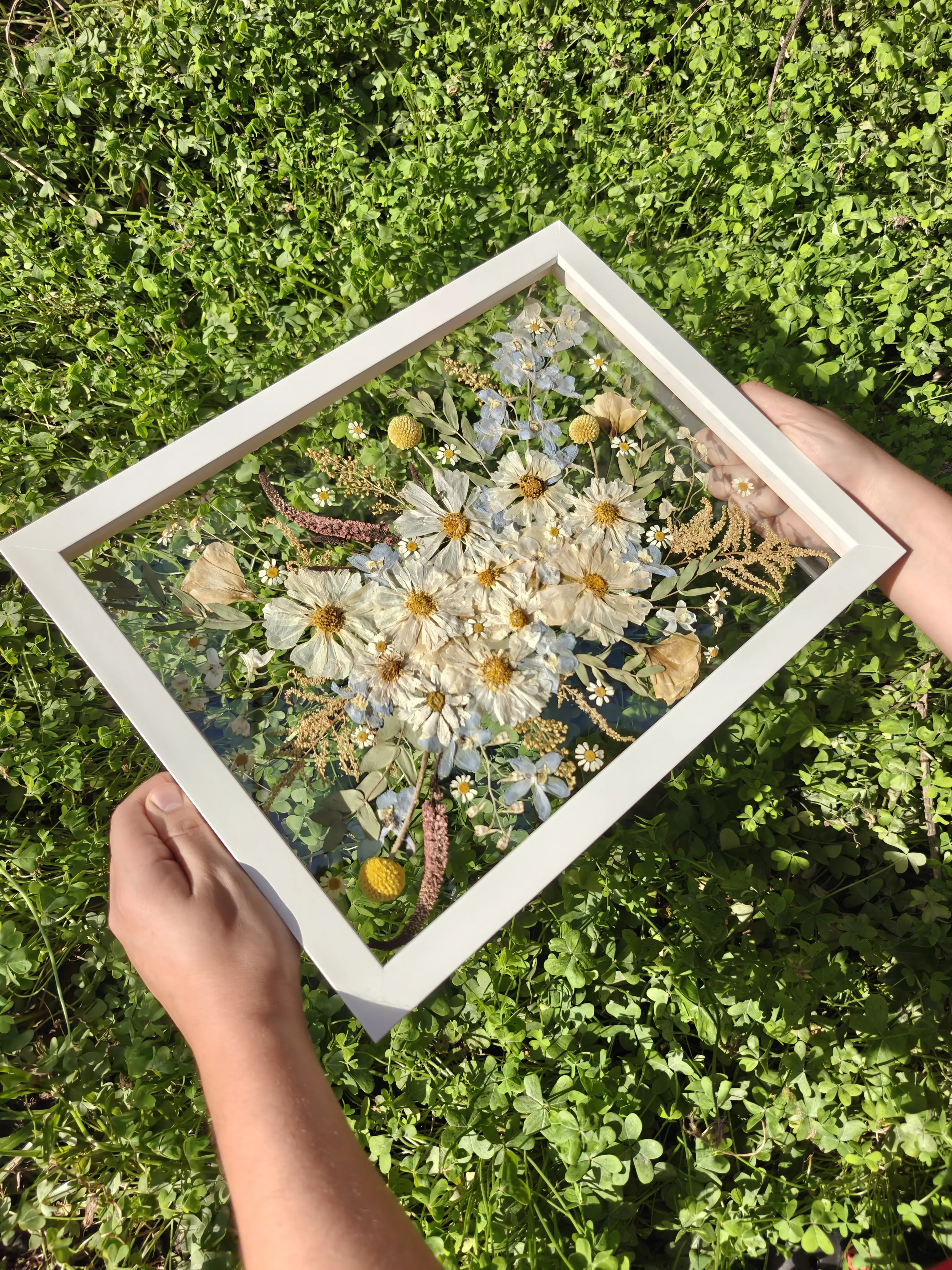
"Forever" is an easy promise to make. But how long do preserved flowers actually last?
The honest answer: it depends on the method, the materials, and where the frame is kept. Let us break down each of these factors with concrete data.
What history tells us
Botanical pressing is not a modern invention. It is a technique with centuries of documented history.
The first scientific herbaria, collections of pressed plants used in botany, date back to the 16th century. There are pressed specimens conserved in European museums that are over 300 years old, still with recognisable shape and structure.
This is not magic. It is science: removing all moisture from a plant suspends the biological processes of decomposition. A flower without moisture does not rot; it retains its structure indefinitely, as long as it is protected from the main causes of degradation.
The three causes of degradation
1. UV light
This is the number one enemy of preserved flowers. The natural pigments in flowers are photosensitive: prolonged exposure to UV radiation degrades colours and weakens petal fibres.
In a frame without UV protection, flowers can visibly fade in 5 to 10 years with direct sunlight exposure.
With museum anti-UV glass, such as the UltraVue® UV70 we use in all our frames, the protection exceeds 99% of UV rays. It is the same glass used in museums to protect works of art. The difference in longevity is dramatic.
2. Humidity
High humidity is the second cause of degradation. Pressed flowers absorb moisture from the environment, which can cause petals to soften, lose shape, or develop mould.
Bathrooms and kitchens are locations to avoid. Other rooms in the home typically have humidity within ideal parameters.
3. Acidity in mounting materials
The third factor is less obvious: the materials used in framing. Non-archival papers and boards have acidity that migrates to the flowers over time, degrading them.
In museum-quality preservation, only acid-free paper and certified conservation materials are used. This is what we do at Flores à Beira-Rio.
Realistic durability expectations
With all three factors controlled, museum anti-UV glass, normal household humidity, and museum-grade conservation materials, the expected durability is:
- 50 to 100 years with good maintenance and a suitable location
- Indefinitely in controlled conditions (such as a museum)
Without anti-UV glass and with direct sun exposure: 5 to 15 years before visible degradation.
The difference is not marginal. It is the difference between a piece that lasts your entire lifetime and one that fades before your children grow up.
What happens to colours over time
Even with full protection, there is a reality worth knowing: the colours of pressed flowers change during the preservation process itself, regardless of time.
Red roses turn burgundy. White roses turn cream. Some flowers keep very vibrant colours; others become softer and more earthy.
This is not degradation, it is the nature of the process. A photograph of living flowers is always more "perfect" than pressed flowers. But the frame has something a photograph does not: the physical presence of the real petal, from the real day.
Practical summary
| Condition | Expected durability |
|---|---|
| Museum anti-UV glass + suitable location | 50-100+ years |
| No anti-UV glass, indirect light | 20-30 years |
| Direct sunlight | 5-15 years |
| Museum conditions (controlled) | Indefinite |
What we guarantee
All Flores à Beira-Rio frames are mounted with:
- UltraVue® UV70 glass (99%+ UV protection, anti-reflective)
- Wooden frame
- Acid-free conservation materials
Maintenance is simple: avoid direct sun, keep in a normal room, clean the glass with a dry microfibre cloth. Nothing more is needed.
Have questions about caring for your frame? Read the complete care guide.